#5 Context is Everything

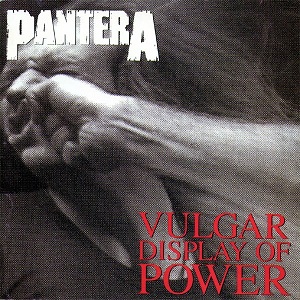
Across all of high school I pretty much listened to a grand total of five albums. Every single darn time, it was Vulgar Display of Power or Far Beyond Driven in the weight room. For in the car or when hanging out with friends, it was either Anthrax’s Attack of the Killer B’s, White Zombie’s La Sexorcisto, or last and maybe least, a tape of Metallica hits a friend made for me (and we mainly only listened to Anthrax for two songs– we loved “Startin’ Up a Posse” for its comedic value, and “Milk” because it has, like, Anthrax’s best riff ever).

I didn’t seriously get into music until ’96, after my third eye was opened during a dorm-room stoning.  It was the marriage of melody and intensity embodied by Alice In Chains that attracted me more than anything that summer.

I bless you with this personal information because I think it illustrates the rock / metal division well.  The Metallica album that summer was Load. To this day Load is my favorite Metallica album.

“Amazing! How is that possible?!”, I hear you gasping.  Simple.  From a rock & roll standpoint, Load is the best Metallica album.  The band themselves admitted to being inspired by AIC.  To me, METAL meant one thing:  the piledriver riffs of Pantera.
PanteraVulgarDisplayofPower

There was another factor.  When my metal friend got me listening to Pantera (circa ’93 or so), Metallica had already hit such a massive level of popularity that it was nearly impossible to perceive them as anything hardcore or rebellious.  In the long run it was my loss to not be able to get heavily into Metallica. On the other hand, my lack of expectations about the band allowed me to see Load for what it was, which was a brilliant piece of alternative hard rock.  (There was no backlash against Load in the town I grew up in, though of course any backlash against it might have caused me to embrace it even more.)

To summarize the point here, where your definition of metal lies on the “punk metal” spectrum is largely decided by the year you first dove head-first into music.  If “metal” to you is Pantera, then more classic-style metal like Metallica and Judas Priest is “rock”.

On the other hand, if “metal” to you is Metallica, then Pantera and Slipknot is more closely related to something like “hardcore”.

Even if you hate the way I just presented it, I think we can agree that there is at least one major dichotomy in metal, or stated another way, at least two large branches can be identified on the metal Yggdrasil— hardcore, riff-focused metal a la Pantera, versus the classic, melody-focused metal a la Metallica.  The downfall of the 00s metalcore movement should have been easy to predict– the two styles cannot be successfully combined. They cannot breed together, which is a concept important to my theory and which I want to discuss again later.

Metallica’s rise to stratospheric popularity with 1991’s self-titled album probably caused a lot of musicians to sell their guitars.  No, not because they were mad that Metallica “sold out”.  Because those bedroom superstars couldn’t top The Black Album in a thousand years.  Pantera itself may have been reacting to Metallica when it perfected its “groove” sound on 1992’s Vulgar Display of Power.

On the other hand, bands in Sweden clearly did not think melody was mined out. Melodic death metal arose in the 90s. One could argue that its lack of success in producing many great bands shows just how hard it is to craft original, appropriate, and agreeable melodies.

 

triangle-magic2

But a lot of the world finds error in my proposition that Gothenburg melogoth is for the birds.  Notable among those people are the types from Decibel magazine.  When you consider how that set worshiped At The Gates so hard it verges on stalking, and then started backing black metal in its most absurdly over-the-top form– laying on keyboards, choirs, “clean vocals”, clean guitar, and other melodic devices like they were going extinct (see Emperor circa Anthems, and the attendant orgiastic hysteria of the day in the metal press, ~1997-2001)– it becomes apparent why the Decibelites only grudgingly acknowledge Pantera.  Many Decibelites think concussive, riff-based metal is, well…    NOT METAL.

What is the problem?  What held many of the Decibelites back from riding out with Pantera to metal Valhalla?  I believe I know why, and I will discuss it in my next few posts.
#4 Stick to the Geniuses Pt. II

Luckily, modern metal is teeming with geniuses.  Here is a far-from-exhaustive list that comes to mind without even trying:

Flo Mounier of Cryptopsy is a drummer nonpareil. Trey Azagthoth of Morbid Angel is the personification of death metal guitar pyrotechnics.  Alex Webster and the three guitar players that have played in Cannibal Corpse compose the ultimate in brutal riffage. David Blomqvist, the lead guitarist presumably responsible for those eruptions of brilliant classical melody on Dismember’s albums– a goddamn prodigy.  Vogg from Decapitated.  Allen West from Obituary is the most underrated metal riffmaster of all time, laying grooves down for miles like a death metal J.Yuenger.  J. Yuenger, in turn, is like the Dimebag Darrel of industrial sleaze rock.  Brilliant.  Varg Vikernes of Burzum, the Nirvana of Black Metal–  while not the most politically correct fellow around, probably at least borderline genius at crafting riffs and atmospheres that move you to a cold and surreal ancient world. Morten Veland, founder of both Tristania and Sirenia, is the ideal symphonic/gothic metal song-writer.  Now on the other hand, no way am I giving a genius award to Tuomas Holopainen of Nightwish.  Fine, the earlier material is pretty high-level, but not the wince-inducing spoken word and theatrical excess of the current Floor-era. While I can grudgingly give murderers a pass if I have to, there is a limit to how cheesy something can be and still get the genius tag.

Don’t forget Ritchie Blackmore, who as Blackmore’s Night released All Our Yesterdays this year (sometimes I wonder if it wouldn’t be wiser to listen to that for our ren faire folk, and listen to Pantera for our metal).

blake

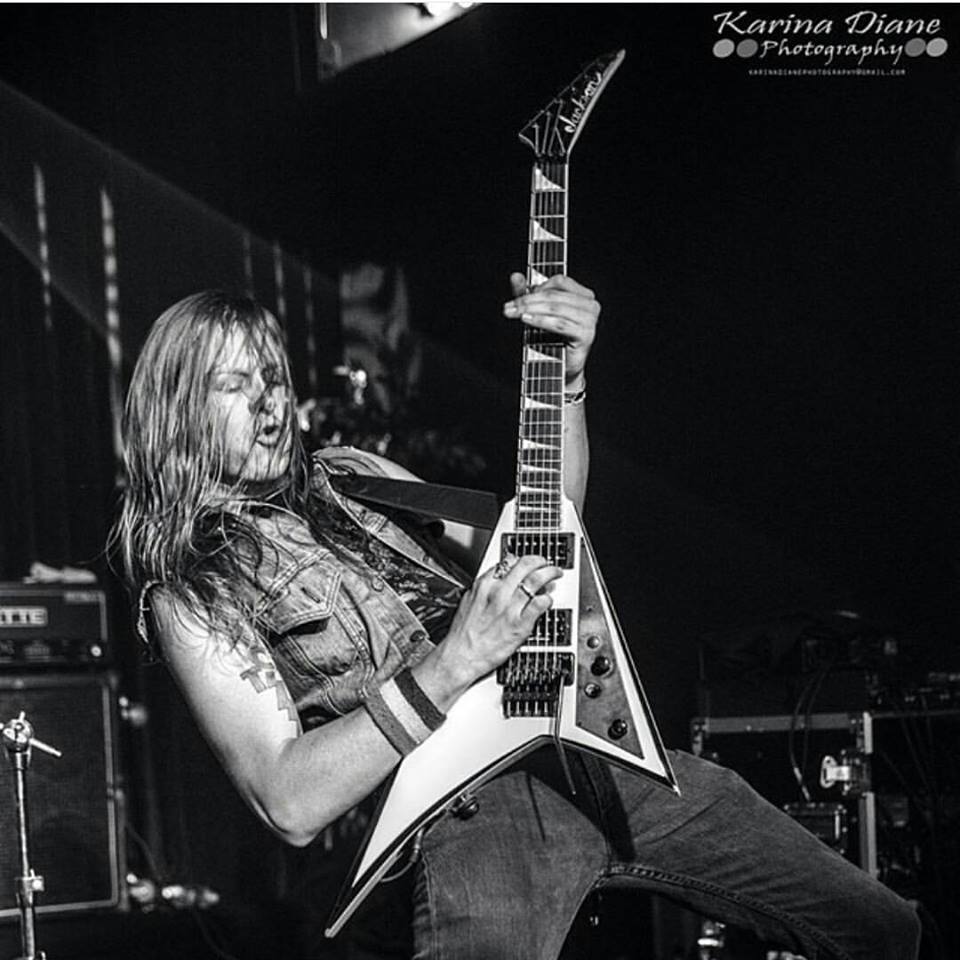
Hallelujah, the halls of the musically mighty are walked by the self-effacing Blake Meahl.  I was just listening to Kill ‘Em All at work the other day, and while I don’t usually listen to Huntress at work, I then listened to one of their songs.  I challenge you, metalhead people:  listen to any song off Kill ‘Em All, or the whole thing, then listen to “Sorrow” by Huntress, and tell me Huntress isn’t great. That is not even an exaggeration. After blasting through a Huntress album you really can only go to a band of Metallica or Pantera’s caliber . While they’ve worked with a couple guitarists, Blake Meahl is a constant on lead guitar– and every song on every Huntress album resounds with a jouissance that cannot be attributed solely to the musical nous of Jill Janus.

Sepultura’s ever-inventive Andreas Kisser comes to mind as a top-shelf riff chef.  I would argue that Chris Storey, the shredder from All Shall Perish’s classic line-up, is genius-level, not to mention whoever is responsible for the riffs on The Price of Existence and Awaken the Dreamers.  Alia O’Brien, flutist, organist, and vocalist for Blood Ceremony, is off the charts.

My wife used to think Mustaine was hot.  Now Mustaine looks like Donald Trump, literally:

Mustaine-Trump combo

While it pains me to say it, given his recent music and public persona, I will grudgingly concede that Dave Mustaine is or was a song-writing mastermind and guitar virtuoso.  Then, there is some uncanny concentration of pure metal luster in Metallica, Avenged Sevenfold and Slipknot that consistently produces jaw-dropping songs.

Speaking of, if you listen to the drums on Avenged Sevenfold’s cover of “Walk” off Live in the LBC / Diamonds in the Rough, you will see that the Rev really knew what he was doing. He nails it, and even adds something new and brilliant to the song, which is like adding something new to God.

Of course, some geniuses are not for everyone. I’m still trying to figure out what the fervor is about Mike Portnoy (but then again I’ve been saving Dream Theater for my old age– you can only get into so many new bands in a year, right?).  My main exposure to him so far is via A7X’s Nightmare, and I don’t think there is a single moment on that album where I sit up and go, “whoa, check out those drums!”  Instead, Portnoy is the definition of a workmanlike session musician on that album.  The kid on Hail to the King, on the other hand (Arin Ilejay) stood out as starkly brilliant in comparison– it saddens me to hear he is out of the picture already.

We all recognize the voices that speak directly to our souls, and that recognition is usually immediate.  There are a lot of vocalists who are geniuses, but not all are geniuses in the traditional musical sense.  Phil Bozeman reminds me of a stunted, genetically-compromised attack dog cloned from Phil Anselmo, and I mean that as a compliment.  Oli Sykes used to be genuinely frightening, before he went emo.  David Vincent and John Tardy?  Devil and Demon respectively.  Is George “Corpsegrinder” Fisher or Lord Worm a better exemplar of the brutal death style?!  Or for that matter, how about Lord Worm’s successor, Matt McGachy?  Can grunting noises be considered an expression of creative genius?  (I’ll give that a provisional “yes”.)    Clearly the list of clever and forceful extreme metal vocalists goes on and on; the aforementioned are only some of my personal favorites.

R.I.P. Mitch Lucker.


My nominee for musical genius of the current decade

When you move to the realm of traditional metal and hard rock, truly great vocalists are always a rarity.  Genre conventions (and subsidies for “raw creativity” and intimidation factor) fly off into the wind, and in their place a high bar is raised for pure spirit and physical vocal chords.  A handful of the classic bands are still operating (e.g. the obligatory giants; Metallica, Megadeth, Maiden, Priest).  I guess Down is still relevant.  Maybe.  Corey Taylor has completely sold out with Stone Sour, but is still an imposing force in Slipknot.  Other than C. Taylor, M. Shadows and possibly P. Emeritus, there is only one true genius-level vocalist who rose to prominence in the current century– and that’s Jill Janus of Huntress.  Not only is Jill Janus a compelling singer with a powerful voice, but she is a musical genius in the traditional sense.  To find a singer who delivers so many indelible, original hooks with such intensity, one must go straight to the classics.

Hard rock’s late 60s/70s voices like Robert Plant, Jim Morrison, Grace Slick, John Fogerty and Janis Joplin, and 90s voices like Maynard James Keenan, Layne Staley, Kurt Cobain, Glenn Danzig, Billy Corgan and Tori Amos, achieved their place in the rock pantheon by virtue of pleasing vocal timbre, melody, pathos, and a fathomless worldly and spiritual wisdom.  They are outside the realm of metal (arguably, Ozzy belongs in this group as much as among the metal gods, infra).

To find the kind of pure puissance and adrenalized energy prized by traditional metal, you have to go to the thrash titans (Hetfield, Mustaine) or to Rob Halford, Dio, Bon Scott, Lemmy, Axl Rose, Pepper Keenan, and Manowar’s Eric Adams.  Jill Janus belongs in the ranks of the Metal Gods, the only singer of the decade to earn that accolade in my book.  For metal or rock to receive a boon like this is a phenomenal blessing!  The militant mobilization of this blog is in part a reaction to the fact that Huntress is not on the cover of Rolling Stone yet.

Janus gets my vote for most relevant metal genius of the decade so far. The most viable competition would be Papa Emeritus (not that you only get one great new singer in a decade– these two bands compliment each other).

One night I was a little stoned and heard Papa Emeritus’s voice on “From the Pinnacle to the Pit”. I immediately saw it as something sinister, and reminiscent of my favorite singer ever, Layne Staley. But unlike, say, that humdrum chart-topping band that named itself after an AIC song (in addition to borrowing AIC’s logo and then additional inspiration from Mad Season), there was nothing derivative here, just a genuine voice that at moments echoed another genuine voice (come to think of it, that’s how I feel about William DuVall.  I think Cantrell did a good job finding a voice sufficiently similar but at the same time different from Layne’s– different faces of one much bigger soul).

Ghost has achieved fairly widespread popularity, by which is demonstrated that no reason exists to believe the world isn’t ready for Huntress (or for that matter Blood Ceremony).  Don’t fight the genius the way I fought grindcore’s shining star.  If you give Huntress’ new album Static a fair shot, you will agree.  And if I can learn to worship Scott Hull, you can surely learn to worship Jill Janus.


#3 Stick with the Geniuses

My canon-oriented, hierarchical attitude towards metal (indeed, most music) will run contrary to certain strains of modernist metal critique, and I will address that in subsequent posts.  Today, I repeat the U.S. Navy’s refrain to keep it simple, stupid.  If you don’t want to buy C.D.s that you will want to sell later, STICK TO THE GENIUSES.  Some bands have one, some have two or more, quite a few have zero.  Like my description of reading the tea leaves in a previous post, when enough people call something brilliant enough times, it is a good idea to at least investigate it and see if it resonates with you.

That said, I have sometimes fought the brilliance like my life depended on it.

Case Study:  Grindcore

It was Phil Mucci’s video for “The Diplomat” that made me think about Pig Destroyer in the first place.  I had previously dismissed P.D. long ago as “grindcore that isn’t Napalm Death -related”, and I personally only liked N.D. during their mid-90s death metal phase, because, well, I eat, drink, and piss death metal.  Anyway, I was at work and the wind must have been blowing the right way, because I had data reception, and I streamed over an hour of non-stop Pig Destroyer.  Afterwards I went to one of my deathcore-with-good-songs bands, and at that moment I confess that they sounded blandly predictable compared to Scott Hull’s demented riffs. Now, it’s unfair to compare your first full-blown encounter with genius to the 17th or so time you listened to an old stand-by, but the point is that I became a fan that day, not of grindcore generally, or even of Pig Destroyer if I think about it, but of Scott Hull.

The thing is, years ago, I spent nearly a whole day seething with rage because I saw “some grindcore retard” in a list of metal’s greatest guitarists.

You know, I just remembered, there was another factor that made me think of Pig Destroyer that fateful day last week.  I had recently come upon Agoraphobic Nosebleed’s Agorapocalypse album in some music someone gave me a long time ago.  That 2009 album, with its mid-paced “thrashcore” breakdowns, is probably the best gateway grindcore album of all time, like The Black Album of grindcore.  When I learned that Scott Hull was the guitarist for both bands (he is now elevated in my book to “grindcore mastermind”), everything suddenly made sense.

Of course, the br00tal Tr00 Kvlt underground people will complain Agorapocalypse sheds the band’s essence of methed-out insanity.  Maybe it does, maybe it doesn’t; that isn’t the point.  If you actually want people to get into grindcore, they need to start somewhere. If you are a good person, you will point budding young metalheads in the right direction, not try to confuse them and make them hate metal so they cry and run back to Miley Cyrus.  My friend had a mind flayer named Cyrus in our D&D campaign back in the early 90s, so we were way ahead of that shit (OP yes, but he got killed anyway).


mind_flayer_by_aurori-d5l4win

R.I.P. Cyrus

Personally I’m not that into Cyrus, but sometimes I just feel like blasting some Ke$ha or Chief Keef because I can’t cope with the stupidity of the metal scene for one more day.

So Agorapocalypse.  It’s catchy and it’s funny.  Grindcore that doesn’t have a sense of humor is like an 80s action movie that isn’t funny.  Perhaps ironically, by missing out on the comedy it’s missing out on the one thing that makes it “serious”.  Be it rendered in a manner sympathetic, or callously indifferent, or mentally disturbed, or genuinely evil, the diversity of ways one may enunciate a mocking disdain for the boundary between life and death is only a reflection of how ripe the idea is for exploring.  I would argue that if grindcore has any meaning, it is probably found there; the sort of cosmic absurdity and reckless abandon we associate with The Butthole Surfers crossed with the violence of Pantera or Slayer.

Pig Destroyer is humorous in a more abstract way; I would just stand slack-jawed and point at the twisted, dizzying riffs Scott Hull pours out.  Feeling a swell of excitement at finally being in the mood for grindcore like, after an eternity (actually, for the first time ever), I next busted out an old Nasum C.D.  I promptly felt bored as the clinical, straight-faced Swedes raged in my ears.

I’m sure it’s not easy being a genius.  And alas, sometimes it is not all fun and games being exposed to genius either.  Because after listening to the best music, it makes it kind of hard going back to the utilitarian stuff.

My subsequent disappointment with Nasum reminds me of a recurring theme.  Breakthroughs in music taste occur because you are finally exposed to either the best band(s) of a genre, or at least a voice that speaks uniquely to you. Then most music nerds go nuts exploring the genre, trying, often unsuccessfully, to chase that first high.  To me, this recurring experience is only support for the proposition that it’s the great artists that matter, regardless of style, even if most people have at least one favored genre that they spend most of their time in.

I’ll submit my nominee for musical genius of the decade in my next post.


#2 Review Theory

I could lecture forever about the economics of music taste– indeed, I think there are people who subconsciously seal themselves into narrow musical cells just because they cannot afford being record collectors.  My best buddy from high school got me into metal.  Around the turn of the century he got into nu-metal, and it’s like his music tastes got flash-frozen at that moment.  I doubt it’s because of how great nu-metal is.  I was deep into death metal by then, and my man wouldn’t give it the time of day.  I swear he just didn’t want to buy new C.D.s.

Of course, after more reflection, I suspect that isn’t the real reason he rejected death metal.  He was raised by fairly strict, rural Protestant parents and I think some of DM’s lyricism and imagery may have rubbed him the wrong way.  It’s not that I subscribe to a Marxist perspective on music and religion that sees both as economic effects rather than causes, but the three things are very much linked.

My friend’s questionable music taste– oops, I mean the question of my friend’s music taste– doesn’t address the matter of how some expensive bodily experiences are all but mandatory for breaking through to more exclusive musical terrain.  Finding a gritty inner city warehouse party (or better yet, the Mother of Raves, seen below) and imbibing various magical elixirs (elixirs with a capital “E”) is virtually the only way an initiate will acquire a taste for the electrochymical experience of underground dance music.

Photo: Michael Troutman/www.dmtimaging.com

Photo: Michael Troutman/www.dmtimaging.com

But your socioeconomic status, and whether you stream or steal your music to inflate the amount you are exposed to, should be largely irrelevant to any considered approach to mining the rich veins of metal and rock.  See, the painful reality is that not much of it is actually good, but rather what miners would call “tailings”, the useless rock.  Most of us should be able to build a collection of canonical works even living paycheck-to-paycheck.  To me, this warrants the decades of painstaking research I described in my last post– and even then, I have admitted to occasionally getting lost on my way to the Mother Lode.  But you know what?  I bet every one of you reading this will at least agree that there is not that much great music, at least relative to the total amount of music created since the 50s.

Sometimes, sitting at work, feeling frustrated and impotent, I search for answers to questions that bug me, like–

 How did “clean singing” ever become an accepted vocal style in the 00s?

Why is the heavy metal music press so stupid?

Why do metalheads feel the need to only like one genre of music?

Why does rock suck so bad these days?

No, seriously, I have entered those things as google searches and found some thought-provoking essays and articles.  In relation to the question “why is there no good rock music anymore”, I encountered a gem from the Baltimore City Paper.  The writer paints a familiar scenario:

Where’d all the rock bands go?” your ding-dong of a friend’ll ask you as he pulls the ghost of Jimmy Page’s peen out of his mouth and climbs across the recliner to crank up the stereo and get the Led out a little louder. You’ll put down your vape and answer, patiently, “There’s … {list of bands}

The valiant scribe then touts some bands that recently played or were about to play in his area.  Just trust me when I say that Zep is not in danger of being knocked from their throne.  Nonetheless I loved the article, not least because I immediately recognized myself as the character with Page’s peen in his mouth (a peen is some kind of Page-branded smoking accessory, no?).  Sometimes, watching someone misunderstand a question is infinitely more interesting, from a sociological standpoint, than any answer could be.

If you have ever been young, and out in the country on a summer night, stars and fireflies twinkling, drinking wine and blasting Zep so loud that you rile up every dog in a two mile radius as you stand exalted in the middle of the best love affair of your life, you will understand why listening to Sleater-Kinney is not a satisfying substitute.  “Art” only occurs at that alchemical junction of subject and object. If either subject (you) or object is insufficiently enriched, the art can’t happen.

This brings me to my theory on music reviews.  If I’m not mistaken, most music critics and bloggers have exactly zero musical training, at least in terms of formal music education.  I’m not sure how many even know how to read music.  But you know what?  It’s okay (the critics who are budding musicians themselves are even worse, on account of the hater-aid).

On computer and gaming threads on-line it is customary to list your hardware “rig”  as part of your signature.  This information is helpful, because a lot of problems arise from mismatches between hardware and software.  By knowing what kind of graphics processor someone else is working with, it gives you a better idea of whether she can help you or even relate to your question.

On rock and metal reviews, wouldn’t it be useful to know whether the reviewer listened to the subject album on a real stereo, or if he listened to it on shitty ipod headphones?  How about a list of individual components and speakers as a preface to the review?

And where and when did he listen to the album?  Was he sitting in traffic on his way to work on a dreary December morning, or flying down the highway in June?

How about drugs?  Might it not be relevant to a discourse on the outer reaches of technical death metal to know what drugs the reviewer recommends?  I mean, this may be a no-brainer (weed is almost always going to be the answer anyway), but let me tell you, there are enhancers for the enhancers.  [DISCLAIMER.  KIDS:  stay in school and don’t do drugs, even weed.  Seriously.  You don’t know how good you have it.  Enjoy being a kid.  You literally have the rest of your life to do drugs, and you will have a much better first year of getting high if you wait until after you finish high school and move out.  Trust me, it’s worth the wait.]

Finally, I want to know a little about the reviewer himself.  I want context.  Otherwise, what’s the point?  How old is he?  Has he drunk deeply from the well of life, or is he a reclusive shut-in?  Does he live in the city or the country?  What other kinds of music does he listen to?  And if the reviewer is going to dismiss something without any real justification, let’s see what bands he thinks are good.  Let’s see him put his own favorites on the line.

If you look at metal magazines today, you almost never see the reviewers talking about guitar solos.  It’s like these guys are essentially nu-metal fans that traded their nu-metal for droning shoe-gaze black metal.  I don’t know how you talk about metal without talking about some cock-rocking guitar solos once in a while unless you really hate the genre’s rock & roll origins.  That kind of biographical information would be helpful for the reader.

The very idea of reviewing music is an absurd act (in a good way). Not because music taste is subjective, but because describing music in English is ultimately futile.  Let music criticism be fun and interesting.  Every album review should be an opportunity to discuss sex, drugs, rock & roll, and audiophile nerdery.  Let me see your raw intelligence and creativity shining through your sparkling or provocative writing style.

In fact, in amateur on-line music reviews, we may find a rare example of form truly trumping substance in a fruitful way. Lacking any authority by way of association with an accepted publication, and likely lacking formal education in music theory (and certainly lacking the ability to replicate the actual experience of hearing the music), the author has but one tool– her skill at weaving her own soulful experiences and passion into a belief that the reader can buy into.

#1 Here’s the Thing About Music Critics

As I leave the dreary industrial pit of a city that I work in, I sometimes pick up a metal mag, my sweaty fingers gripping the pages as I rush to the ole train, heart pounding with anticipation (now in all fairness, it must be said that I am currently fighting the weight gain we may as well call the “married fifty”, hence the sweaty sausage fingers; meanwhile, the pulse must be measured relative to my workaday state, which is clinically comatose/deceased).

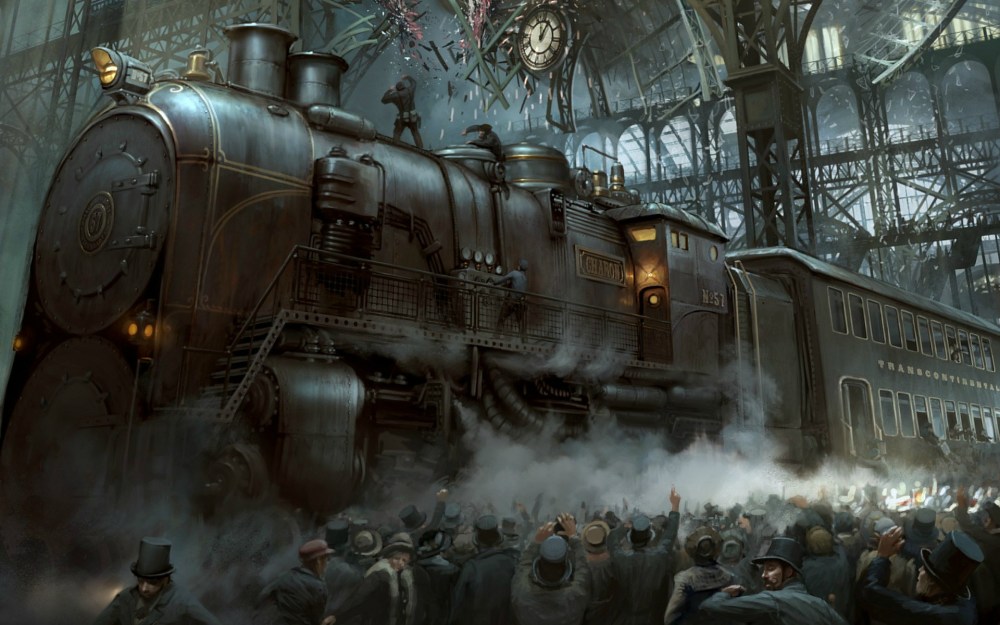
My favorite part of any metal magazine is the reviews; why, I adore Metal Hammer, which contains so many neat little paragraphs of clever lyricism disguised as music criticism that I could gape in slack-jawed amazement for hours (or is it the other way around?  I don’t know).  Of course there are always one or two reviews that are highly germane to my interests; should one of those reviews fail to make me blow a fuse and thence hurl the rag under the sparking tracks of the great steam locomotive, hoping it (the magazine) to be permanently destroyed, I will then proceed to read all the reviews. Frankly, when I read all those other reviews, I rarely gain even the faintest inclination to check out the subject band.

2GWZE


Instead, after my slow ride on the trundling iron horse comes to a stop, I hop along like Gollum to my man cave, and thereupon study the remaining reviews like they are tea leaves waiting to be deciphered.  In more metal-friendly imagery, they are splattered entrails that graph hidden mysteries.  Did you know that another archaic form of divination is Scapulimancy, which is observing how an animal’s scapula cracks when heated by fire?

gollum


Egad, back on track I must take us.  As I was saying, by making connections between the different reviews, and by noting which bands are cited most often as influential, I gain a Gestalt view of the metal landscape, like Adrian Veidt from Watchmen monitoring geopolitics from his secret lair, or like a BMW-driving analyst poring over shifting stock and commodity prices as if his favorite band, BFMV, depended on it.  This has been my practice for well over sixteen years now.

commodity-chart11.jpg


Speaking of commodities, how many albums are you going to invest in, any given month? I can only afford a couple C.D.s. a month, so all the better if they are not the sonic equivalent of snake oil.  Even in this era of free music streaming I have been known once and again to buy a shitty C.D. from these musical mountebanks and charlatans.  For, by some unlikely alignment of environment, temperament, and bodily humors, I will be hopelessly seduced by a cutting-edge sound.  At such times, I may very well decide to make a purchase without fully thinking out all the implications.  Come to think of it, it reminds me of this girlfriend who used to get me drunk and then take me out shopping for her.

Here’s the thing about our music critics.  Professional music critics are paid to listen to music.  You better believe that affects their judgment.  They probably don’t earn much, but that doesn’t change the fact that they must, to ply their trade, have an excess of open-mindedness.  For how else could they plow through so much mediocre music?

How, you ask, can one have too much open-mindedness?  Easy.  Imagine you had to buy vinyl and not steal music.  You would have to learn to be discriminating or go broke.

Likewise, when an editorial says a band “continues to defy categorization”, I honestly tend to tune out. Valuing experimentation is nice, of course, unless you prize it over songcraft.  Consider the source when you see an editorial about an “experimental” band.  Again, music critics have to listen to a ton of music.  They might not have time to listen to an album twice to enable all the songs and hooks to sink in.  Instead, physically and emotionally drained, staring down the barrel of a deadline, another critic succumbs to the siren song of some “new” sound that tantalizes on first listen.  The result is a critical scene that values form over substance, style over song, and it does the world no favors.

Regardless of music politics and economics, my dear friend, you are a mortal, and will only live so long.  That means you have a finite amount of time to listen to music, and while it is great to support your local bands, a true metal elitist will burn most of his/her time and brain cells listening to the maestros.